Showing posts with label Frank Lloyd Wright. Show all posts

Monday, November 26, 2018

Sukiya: Traditional Japanese Architecture

Sukiya style


Sukiya style


Sukiya style


Sukiya style


My new new thing -- traditional Japanese architecture. This is the high-end style, "sukiya" (as contrasted with "minka")...

Sukiya style architecture

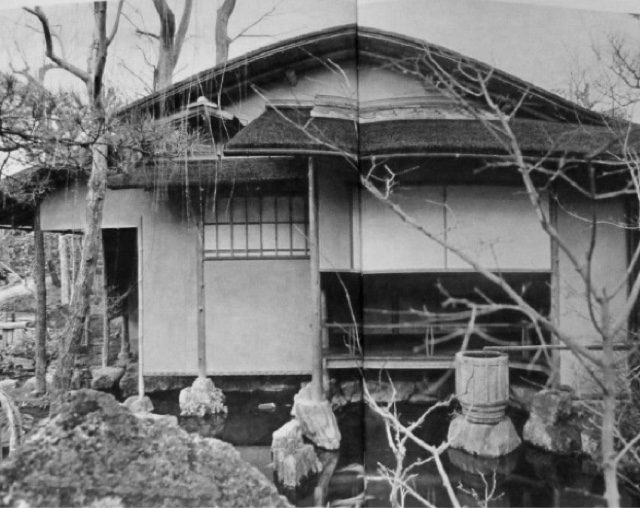
The true spirit of Japanese architecture can be found in the Japanese house and the sukiya style of residential construction. Japanese houses come in many shapes and sizes -- but for 400 years the majority of them have been built in the sukiya style. Anyone interested in the architecture of Japan should become familiar with this vernacular.

The sukiya style Japanese home is a refined and graceful living space that employs elements of the Japanese tea house. Characteristics of the sukiya style include delicate proportions, the ample use of natural materials, the integration of interior and exterior spaces, and a general sense of quiet elegance with rustic overtones. In the traditional Japanese house, moderation is of key importance. In addition to slender wood elements and the lack of ostentation, the sukiya living environment strives, not to overwhelm, but rather to harmonize with the human scale and human sense perception.


Thursday, October 18, 2018

The Frank Lloyd Wright Collection of Surimono

Surimono


Surimono


Surimono


Surimono


Surimono ("printed things') constitute one of the most delicate genres in Japanese printmaking. This genre fascinates because it combines poetry and image and because it presents a pictorial puzzle, which provides the viewer with a particular insight into the intellectual and literary world of late 18th- and early 19th-century Edo (today's Tokyo). 

Major artists such as Katsushika Hokusai, Utagawa Kunisada, Totoya Hokkei, and Yashima Gakutei, to name but a few, provided imagery to accompany the poetic exploits of poetry club members. 

The prints were circulated among networks of poets and friends and, in contrast to other prints of the period, were not produced for commercial gain.

Intricate still lifes, historical and mythical heroes, actors on the stage, and tranquil landscapes form a visual partnership with the witty poems (kyōka). The beauty of these prints is enhanced by the astonishing printing quality, including the use of metallic pigments and blindprinting.


Tuesday, September 25, 2018

Organic Simplicty

Frank Lloyd Wright


Robert Doisneau


"Organic simplicity might be seen producing significant character in the harmonious order we call Nature -- all around, beauty in growing things. None insignificant." -- Frank Lloyd Wright, 1931

Sunday, September 9, 2018

Fountainhead: The Architectural Renderings


Harold Michelson


Chesley Bonestell 


Harold Michelson


Chesley Bonestell 


Harold Michelson


Chesley Bonestell 


Harold Michelson


Chesley Bonestell 


Harold Michelson


Harold Michelson


Chesley Bonestell 


Chesley Bonestell 


Chesley Bonestell 


Chesley Bonestell 


Chesley Bonestell 


Chesley Bonestell 


Chesley Bonestell 


Chesley Bonestell 


Chesley Bonestell 


Chesley Bonestell 


Chesley Bonestell 


Chesley Bonestell 


Chesley Bonestell 


Chesley Bonestell studied architecture at Columbia University in New York City. Dropping out in his third year, he worked as a renderer and designer for several of the leading architectural firms of the time. While with William van Alen, he and Warren Straton designed the Art Deco façade of the Chrysler Building as well as its distinctive eagles. During this same period, he designed the Plymouth Rock Memorial, the U.S. Supreme Court Building, the New York Central Building, Manhattan office and apartment buildings and several state capitols.

Returning to the West Coast, he prepared illustrations of the chief engineer's plans for the Golden Gate Bridge for the benefit of funders. When the Great Depression dried up architectural work in the United States, Bonestell went to England, where he rendered architectural subjects for the Illustrated London News. In the late 1930s he moved to Hollywood, where he worked (without screen credit) as a special effects artist, creating matte paintings for films, including The Hunchback of Notre Dame (1939), Citizen Kane (1941) and The Magnificent Ambersons (1942).

All the views of turn-of-the-century New York and of Charles Foster Kane's mansion, Xanadu, are Bonestell's artwork. In The Fountainhead, Bonestell in a sense was Howard Roark -- all of the buildings created by Ayn Rand's superheroic architect are by Bonestell. He eventually became Hollywood's highest-paid matte artist.


Chesley Bonestell 


Chesley Bonestell 


Saturday, September 8, 2018

Bring Back the Future of the Past!


From yee Wiki:

Mid-Century Modern (MCM) is the design movement in interior, product, graphic design, architecture, and urban development from roughly 1945-1975. The term, employed as a style descriptor as early as the mid-1950s, was reaffirmed in 1983 by Cara Greenberg in the title of her book, Mid-Century Modern: Furniture of the 1950s (Random House), celebrating the style that is now recognized by scholars and museums worldwide as a significant design movement.

The Mid-Century modern movement in the U.S. was an American reflection of the International and Bauhaus movements, including the works of Walter Gropius, Florence Knoll, Le Corbusier and Ludwig Mies van der Rohe. Although the American component was slightly more organic in form and less formal than the International Style, it is more firmly related to it than any other. Brazilian and Scandinavian architects were very influential at this time, with a style characterized by clean simplicity and integration with nature. 

Like many of Frank Lloyd Wright's designs, Mid-Century architecture was frequently employed in residential structures with the goal of bringing Modernism into America's post-war suburbs. This style emphasized creating structures with ample windows and open floor plans, with the intention of opening up interior spaces and bringing the outdoors in. Many Mid-century houses utilized then-groundbreaking post and beam architectural design that eliminated bulky support walls in favor of walls seemingly made of glass. Function was as important as form in Mid-Century designs, with an emphasis placed on targeting the needs of the average American family.

In Europe the influence of Le Corbusier and the CIAM resulted in an architectural orthodoxy manifest across most parts of post-war Europe that was ultimately challenged by the radical agendas of the architectural wings of the avant-garde Situationist International, COBRA, as well as Archigram in London. A critical but sympathetic reappraisal of the internationalist oeuvre, inspired by Scandinavian Moderns such as Alvar Aalto, Sigurd Lewerentz and Arne Jacobsen, and the late work of Le Corbusier himself, was reinterpreted by groups such as Team X, including structuralist architects such as Aldo van Eyck, Ralph Erskine, Denys Lasdun, Jorn Utzon and the movement known in the United Kingdom as New Brutalism.

Pioneering builder and real estate developer Joseph Eichler was instrumental in bringing Mid-Century Modern architecture ("Eichler Homes") to subdivisions in the Los Angeles area and the San Francisco Bay region of California, and select housing developments on the east coast. George Fred Keck, his brother Willam Keck, Henry P. Glass, Ludwig Mies van der Rohe, and Edward Humrich created Mid-Century Modern residences in the Chicago area. Mies van der Rohe's Farnsworth House is extremely difficult to heat or cool, while Keck and Keck were pioneers in the incorporation of passive solar features in their houses to compensate for their large glass windows.


Sunday, August 19, 2018

Zen Gardens


Frank Lloyd Wright 


Frank Lloyd Wright 


Frank Lloyd Wright 


Frank Lloyd Wright 


Frank Lloyd Wright 


Frank Lloyd Wright 


Frank Lloyd Wright 


Explore Two of Rockford’s Hidden Architectural Gems

Docent-led tours focus on the architectural components of two homes with Japanese cultural design influences but distinctly different character.  Guests will be granted exclusive access to Anderson Japanese Gardens’ 16th century Sukiya-style Guest House and the Laurent House, the only home designed by Frank Lloyd Wright specifically for a client with a physical disability.