 |
| Jane, Don, and Alf Mangus in Guatamala, c. 1959 |
Showing posts with label Alfred Mangus. Show all posts
Showing posts with label Alfred Mangus. Show all posts
Thursday, April 7, 2016

Wednesday, June 13, 2012
Mangus Family Lore: Marvin Mangus in the Yukon


Here's the magnificent Marv doing his field work in the Yukon in the sixties, photographer unknown.
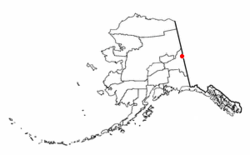
In the summer of 1967, we accompanied dad on one of his field trips to Eagle, Alaska, smack dab on the Alaska/Canada border. It was a long, dusty drive from Anchorage to Eagle (pop. 68). Once there, he had a helicopter at his disposal, so one fine day, judt for kicks, the pilot flew Alf and me to a remote lake where no one had ever fished. Virtually every cast we made brought back a beautiful rainbow trout. It was one of the few times I was able to catch anything than other lost fishing lures.
Friday, June 8, 2012
Mangus Family Lore: Guatemala City 1959

I've been surrounded by art, science, and books my whole life. Those are my father's landscape paintings on the wall behind us. My father always wanted to be a full-time artist, but my grandfather, Alfred R. Mangus (my brother's namesake), was very practical, and so dad became a geologist instead, studying at Penn State.
Marv soon took up painting as a member of the Washington D.C. Landscape Club in his free time, and he was mentored by another member artist there named Roger Rittase. These fifties paint daubers had a direct lineage to Daniel Garber, and they painted in an style now characterized as Pennsylvania Impressionism.
Dad combined his science with his art for an unparalleled understanding and appreciation of whatever landscape he found himself in. On top of that, he was a robust man of adventure, happily exploring and mapping remote regions in the Canadian and Alaskan Arctic, in the jungles of Guatemala, and far-flung lands elsewhere. It was not uncommon for him to be away on a field trip for months at a time and this was during the days of limited communication.
Dad preferred the arid climate of Alaska, but he had many memorable adventures in Guatemala. He would be hacking his way through the jungle with his guides, only to stumble across an ancient, abandoned Mayan pyramid that hadn't been touched in centuries. He also told me he accidentally discovered a Cold War compound where ordinance and vehicles were being stockpiled for the Bay of Pigs invasion of Cuba.
My mother enjoyed living in Guatemala, but Dad was glad to move on. We lived in Guatemala City from 1958-60. Our next stop would be Calgary, Canada.
Wednesday, May 30, 2012
Icons from the Age of Anxiety: Bobby Fischer

Like mastering math, pool, or poetry I really savored the idea of playing winning chess -- sadly, I just wasn't too successful at those endeavors. My brother played our neighborhood pals like Mark Moustakis, who went on to become the Alaskan State Chess Champion for a while. Alfred played on the East Anchorage High School chess team with his classmates, Steven "Wayne" Gordon and Willie Stone. Ultimately though, Alfred had to quit playing in his post-High School chess career because he just couldn't stand the pain of losing, even if he didn't lose that many matches. The soul-wrenching agony of losing was far more intense than the joy of winning -- a textbook case of "loss aversion."
After High School, Mark and Wayne used to go to chess tournaments in the "Lower 48" to collect autographs from chess Grandmasters, as well as try to increase their Elo ranking by winning matches. I've had two good friends that have written chess columns and books, Wayne Gordon, and here in Dallas, Ken Artz. Both of them also collected comic books.
I enjoyed being a chess hanger-on, and followed Bobby Fischer's career avidly, along with my friends'. He went from being a national hero to being a despised pariah. The only comparable crash I can think of is the soaring popularity and then dizzying plunge in the pop culture status of The Green Berets during the Vietnam era.
From the DVD description, "In 1972, America was chess-obsessed. The Soviet Union used chess to demonstrate its intellectual superiority to the West, but along came a young, lone American, who demolished the Russian masters of the sport. At the height of his career, Bobby Fischer was better known than any other man in the world. Relentless press attention, political pressure and a monomaniacal focus on chess ultimately led to his undoing.
Filmmaker Liz Garbus uses the narrative tension of the 1972 match between Fischer and the defending World Champion, the Russian Boris Spassky, to explore not only the politically charged period of the early 1970s but also the nature of genius, madness and the game of chess itself."
Subscribe to:
Posts (Atom)